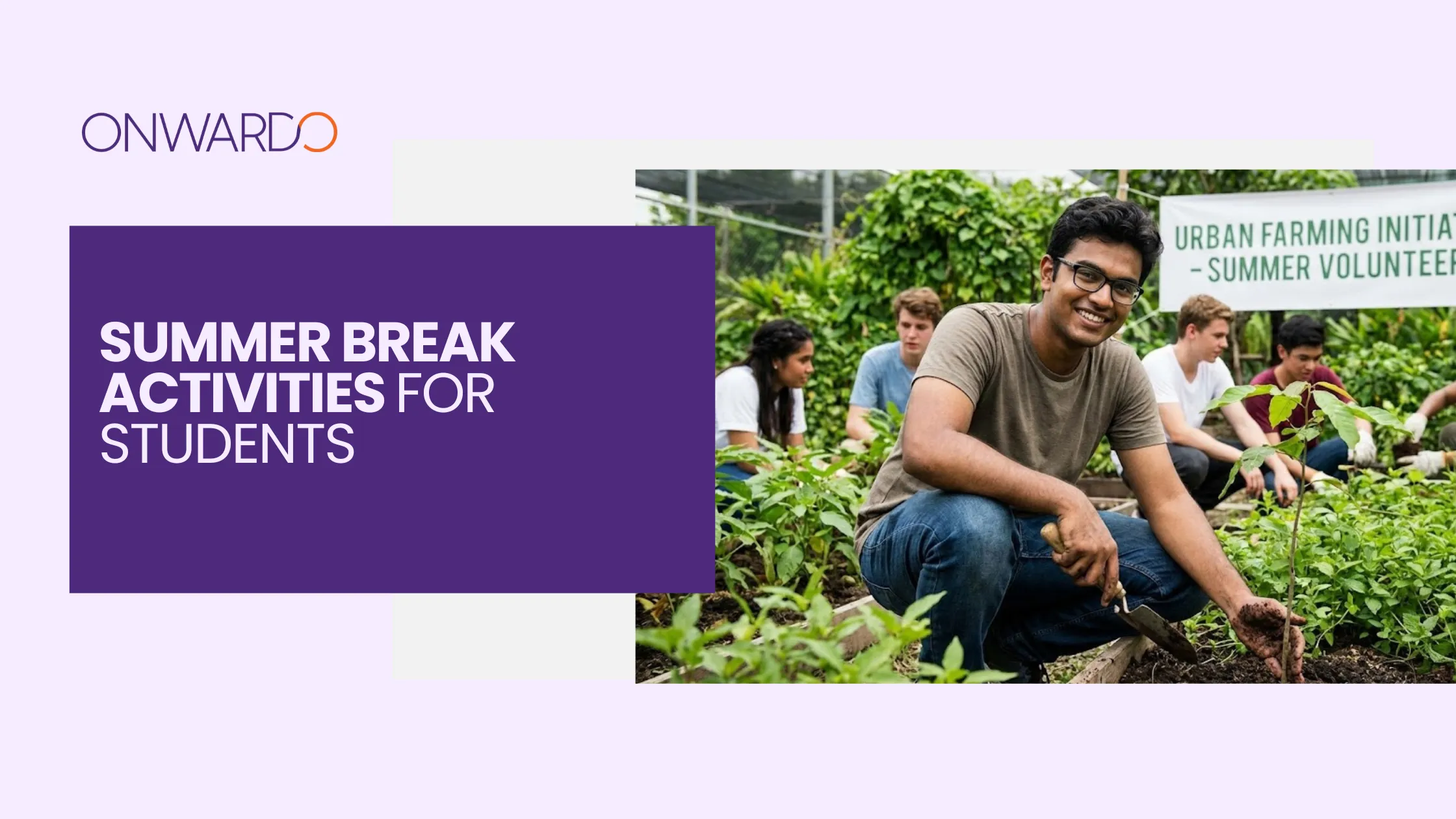
The long summer vacation is one of the most important periods for a student’s academic journey. With less pressure and greater flexibility, it offers the perfect opportunity to reset, grow, and prepare for the future. Instead of letting the weeks just slip by, choosing the right summer break activities can help you return to university more confident as well as skilled.
Let us learn more about summer break activities that can enhance skills.
When Do University Summer Breaks Begin?
At most UK universities, summer holidays begin once of end-of-year exams are completed. This would happen between late May and mid-June, depending mostly on course, year of study, and exam timetable.
The break generally lasts until late September, just before the autumn term starts. That gives students anywhere between 12 to 16 weeks- a substantial amount of time which can be invested in meaningful summer break activities rather than being spent unproductively.
Gain Work Experience During Summer
One of the most impactful ways to use your summer break is by gaining work experience. Employers increasingly value practical experience alongside academic qualifications, and summer offers the ideal window to explore professional environments.
Internships, part-time jobs, or short-term placements can help in:
Develop industry-relevant skills.
Build professional networks
Gain clarity about career paths
Strengthen your CV and interview answers
If you have a specific industry in mind, consider sending speculative applications to startups and small businesses. Many organizations are open to hiring motivated students even if roles are not formally advertised. The university careers service can also be extremely helpful, offering access to exclusive opportunities and employer contacts.
Even a few jobs unrelated to your long-term career- which include retail, hospitality, or customer service- develop some transferable skills like communication, teamwork, and also problem- solving.
Explore Virtual Internships and Online Programs
If in-person roles are limited or you need flexibility, virtual internships are for excellent alternative. Many companies now offer remote, project-based experiences that allow students to gain insight into industries from anywhere.
These opportunities are useful for students who want:
Explore multiple career options
Work around travel or family commitments.
Gain experience with global organizations.
Some virtual summer break activities, like online internships, also demonstrate adaptability and digital skills, which are important in modern workplaces.
Enrol in Summer Schools or Short Courses
Summer schools are another productive way to use your break. Popular areas of interest include:
Coding and programming
Data science and cybersecurity
Entrepreneurship and innovation
Design and creative thinking
Foreign languages
International relations and public policy
Another option which can be considered is microcredentials- short, affordable courses designed to teach specific, as well as job-ready skills.
Travel for Personal & Professional Growth
Summer Travel Activity
Description
Skills Developed
Personal & Professional Benefits
Working Abroad
Short-term employment in another country during summer breaks
Independence, adaptability, communication
Builds global exposure, improves employability, boosts confidence
Summer Camps Abroad
Working as a camp counsellor managing children or groups
Leadership, teamwork, organisation, communication
Enhances leadership profile, teamwork experience, cultural awareness
Volunteering Overseas
Participating in social, environmental, or community projects
Empathy, problem-solving, resilience
Shows social responsibility and commitment beyond academics
Language Programmes
Enrolling in foreign language schools abroad
Language proficiency, cultural understanding
Strengthens academic profile and global communication skills
TEFL Programmes
Teaching English as a Foreign Language in international settings
Teaching skills, communication, cultural sensitivity
Adds teaching experience and international work exposure
Cultural Exchange Travel
Immersive travel focused on cultural learning
Adaptability, open-mindedness
Demonstrates initiative and willingness to step out of the comfort zone
Volunteer and Give Back
Volunteering is a powerful way to gain experience while contributing positively to society. It would demonstrate initiative, empathy, and commitment- qualities that universities and employers value highly.
Volunteering opportunities would include:
Local charities and NGOs
Food banks and community kitchens.
Environmental clean-ups.
Animal shelters and conservation projects.
Cultural festivals and events.
Volunteering also provides strong examples for personal statements, CVs, and interviews as one of the most rewarding summer break activities.
Start a Personal Project
Personal projects show creativity, self-motivation, and the ability to turn ideas into actions. Depending on your interests:
Build a mobile app or website
Contribute to open-source software
Create a digital marketing or social media page.
Start a blog, podcast, or YouTube channel.
Prepare for the Next Academic Year
Using part of a summary to prepare academically can significantly reduce stress during the next term. Summer is the most ideal time for:
Organise finances and plan budgets.
Apply for part-time jobs or funding
Explore dissertation or research topics
Improve academic skills such as writing and research.
Balance Productivity with Rest
While making the most of your break is important, rest should not be overlooked. Summer is also a time for recharging mentally and physically after a demanding academic year.
The most effective approach is balance- combining productive summer break activities with time to relax, reflect, and enjoy personal interests.
Final Thoughts
By selecting meaningful summer break activities, you can build experience, explore interests, and prepare for academic and professional success. The key is intentionality. Plan wisely, stay flexible, and also use this time to invest in yourself- because the impact a well-spent summer can last far beyond the holiday in itself.
Frequently Asked Questions
What are the best Summer Break Activities for university students?
The best Summer Break Activities include internships, part-time jobs, volunteering, summer schools, online courses, travel programmes, and personal projects. These activities help students gain skills, improve employability, and prepare for future academic or career goals.
How can I make my summer break productive?
To make your summer productive, set clear goals, create a simple plan, and balance learning with rest. Choosing skill-based Summer Break Activities, such as work experience, online certifications, or volunteering, can help you grow without feeling overwhelmed.
Are internships necessary during summer break?
Internships are not mandatory, but they are highly beneficial. They provide real-world exposure, help you explore career paths, and strengthen your CV. If internships are not available, alternative Summer Break Activities like personal projects or virtual programmes can be equally valuable.
Can I include summer break activities on my CV?
Yes, absolutely. Internships, volunteering, summer courses, and personal projects are all relevant Summer Break Activities that can be added to your CV. Make sure to highlight the skills you developed and the impact of your work.
What summer activities help with career planning?
Career-focused Summer Break Activities include internships, job shadowing, virtual industry programmes, networking events, and skill-based courses. These experiences help you understand different roles and make informed career decisions.
Are online courses useful during summer break?
Yes, online courses are a flexible and cost-effective way to upskill during the summer. Many students choose online Summer Break Activities such as microcredentials, coding courses, or academic writing programmes to strengthen their profiles.
How much time should I spend on summer activities?
There is no fixed rule. Ideally, you should balance productive Summer Break Activities with adequate rest and personal time. Even dedicating a few hours a week consistently can lead to meaningful progress.
Do summer break activities really improve employability?
Yes, employers value candidates who use their time proactively. Well-chosen Summer Break Activities demonstrate initiative, adaptability, and practical skills, all of which significantly improve employability.
Follow us on social media for the latest updates, tips, and success stories.
Fill the details below
Fill the details below
Fill the details below to download
How to Avail Scholarship
It is a simple 3-step process
Step 1
Upload supporting document(s)
Step 2
Receive a waiver code within 1 hr*
Step 3
Apply waiver code while filling the enrolment form
1. We will send you a coupon code for the applicable waiver within 1 working
hr* between 9:30 a.m. and 7:30 p.m.(in case you do not receive any reply, kindly check your
junk and spam folder). Post 7:30 p.m. you will receive the coupon code the next working day.
2. Please apply the waiver code while filling the online enrolment form.
3. Please do not make the payment without applying/availing the coupon code.
If this is not followed, no refund will be provided for the extra fee paid with respect to the
applicable waiver.
4. Waiver policy and Prices are subject to change without prior notice and no
refund will be provided under any circumstances.
5. At any time, you can avail only ONE of the below 5 scholarships.
6. Also, you cannot combine the scholarships with any other offers/ waivers
offered by IMS at the time of enrolment.
7. In case you are eligible for multiple scholarships/offers/waivers at the
same time, the offer that gives you the maximum discount will be considered.
Fill the details below
Your Estimated Score
Note:
Your profile consists of multiple parameters, including academics, aptitude test scores
(GMAT/GRE/SAT), work experience, extracurricular activities (sports, leadership roles), and
statement of purpose
(SOP). Each factor has its own weightage.
Academics is just one of the many factors considered in the overall evaluation.
The above score is an indicative profile score based solely on academic performance and is
not the final score.
The final assessment varies from university to university and program to program.
You can reach out to our expert counselors for a thorough evaluation of your profile.